
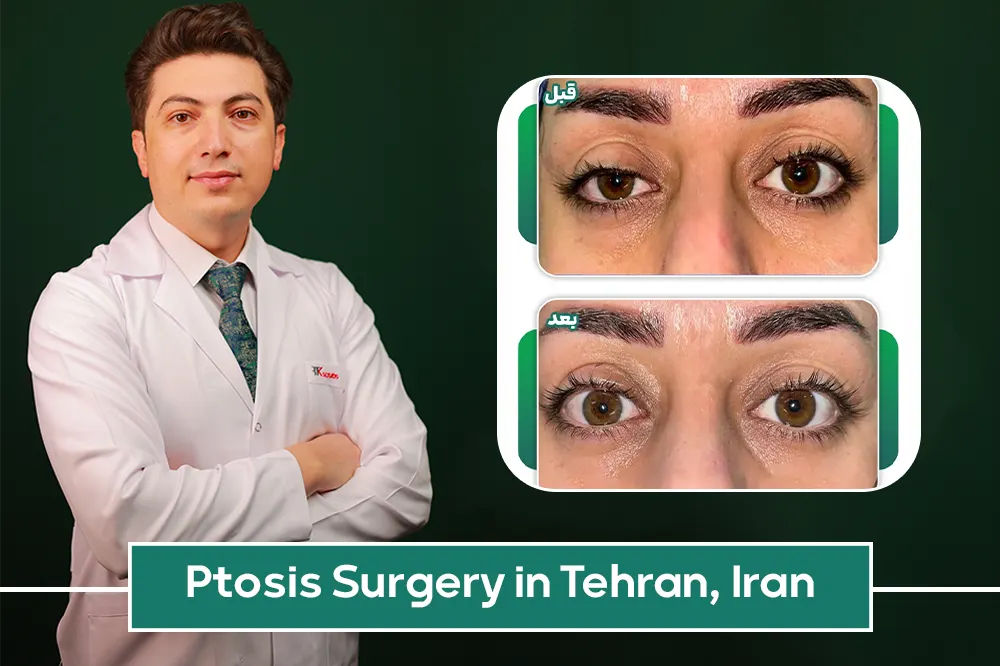
If you are looking for ptosis surgery in Iran, choosing an experienced ophthalmologist is one of the most important steps toward restoring both vision and eyelid appearance. Dr. Mehdi Mohammadkhani is an ophthalmologist and eye surgeon in Tehran who specializes in diagnosing and treating all types of eyelid ptosis for both Iranian and international patients.
This guide explains what ptosis is, its symptoms, available surgical techniques, costs, recovery, and the treatment process for patients traveling to Iran.
What Is Ptosis?
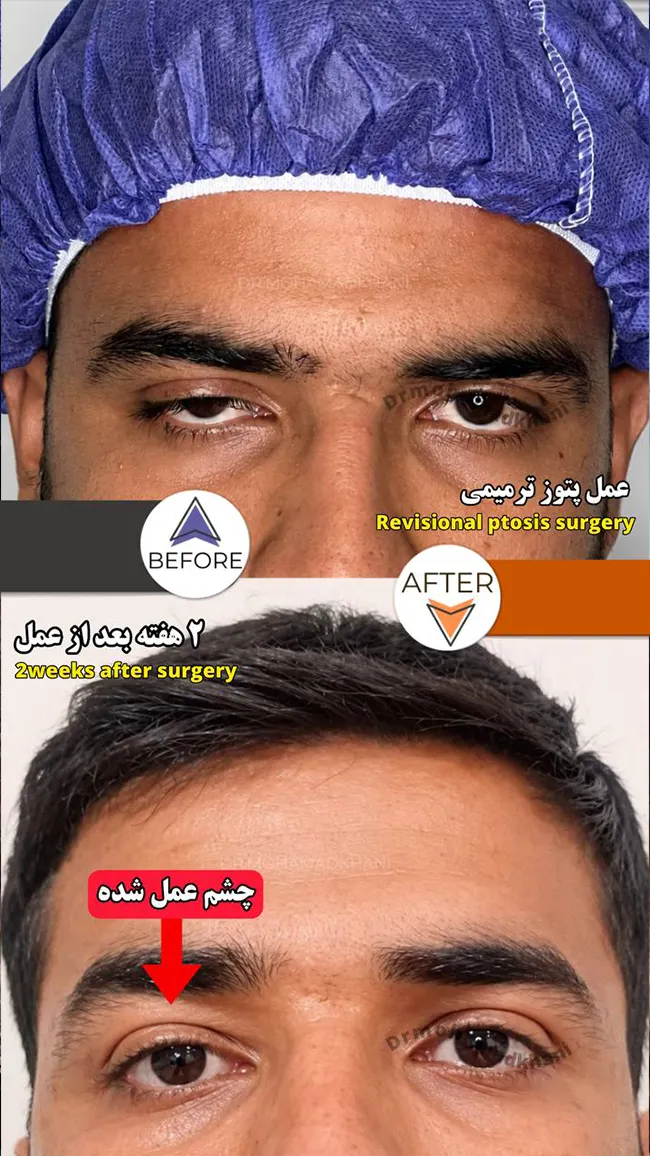
Ptosis, also known as drooping eyelid, is a condition in which the upper eyelid hangs lower than its normal position. It can affect one eye (unilateral ptosis) or both eyes (bilateral ptosis). Depending on its severity, ptosis may partially or completely block vision and can also affect facial symmetry.
Ptosis may be present from birth (congenital ptosis) or develop later in life because of aging, muscle weakness, nerve disorders, trauma, or previous eye surgery.
Symptoms of Ptosis
- Drooping of one or both upper eyelids.
- Reduced upper field of vision.
- Difficulty keeping the eyes fully open.
- Eye fatigue while reading or driving.
- Raising the eyebrows to improve vision.
- Tilting the head backward to see better.
- Uneven eyelid appearance.
If ptosis affects your vision or daily activities, surgery is often the most effective treatment.
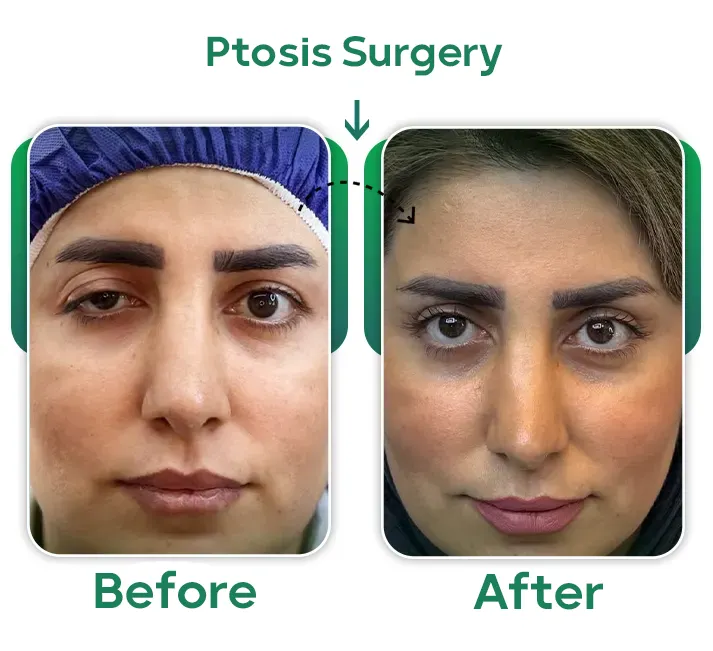
Ptosis Surgery by Dr. Mehdi Mohammadkhani in Tehran, Iran
Dr. Mehdi Mohammadkhani is a specialist eye surgeon in Tehran with experience in performing advanced ptosis surgery based on each patient’s eyelid anatomy, muscle function, and type of ptosis.
Most ptosis surgeries are performed as outpatient procedures in Dr. Mohammadkhani’s private clinic in Tehran. Patients usually leave the clinic on the same day without hospitalization.
In special cases, when ptosis surgery needs to be combined with another eye or eyelid procedure, the surgery may be performed in a hospital.
Why Choose Dr. Mehdi Mohammadkhani?
- Specialist ophthalmologist and eye surgeon.
- Advanced surgical techniques for different types of ptosis.
- Personalized treatment plan for every patient.
- Outpatient surgery in most cases.
- Treatment for both adults and children.
- Consultation and follow-up for international patients.

Types of Ptosis Surgery Performed by Dr. Mehdi Mohammadkhani
Levator Advancement / Levator Resection
This procedure tightens or repositions the levator muscle to lift the eyelid to a natural position. It is commonly used for acquired ptosis and patients with good levator muscle function.
Frontalis Sling Surgery
Frontalis Sling surgery connects the eyelid to the forehead muscle, allowing the forehead muscle to help lift the eyelid. It is commonly recommended for severe congenital ptosis and patients with poor levator muscle function.
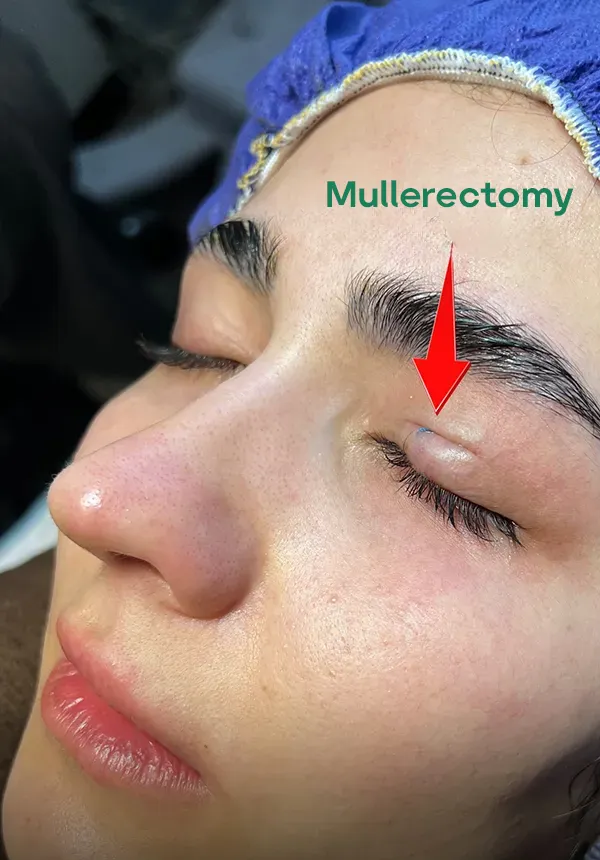
Müller Muscle–Conjunctival Resection (MMCR)
MMCR is a minimally invasive procedure performed from the inside of the eyelid without an external incision. It is usually recommended for selected patients with mild ptosis.
Who Is a Candidate for Ptosis Surgery?
You may be a candidate if you have:
- Congenital ptosis.
- Age-related eyelid drooping.
- Unilateral or bilateral ptosis.
- Vision obstruction caused by drooping eyelids.
- Functional or cosmetic concerns related to eyelid position.
A complete eye examination is necessary to determine the most appropriate surgical technique.
Read Also: Endoscopic Temple Lift in Iran: A Modern Approach to Facial Rejuvenation
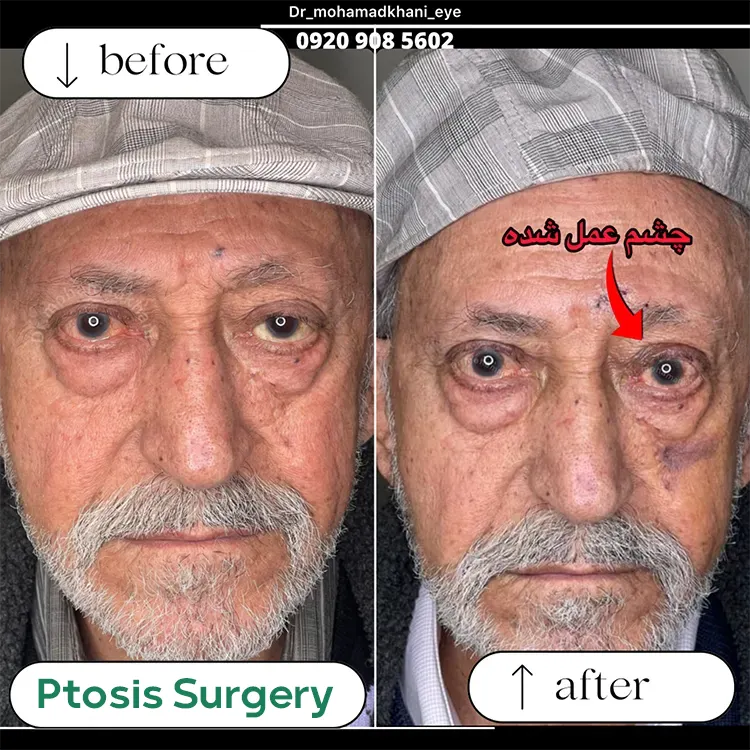
Cost of Ptosis Surgery in Tehran
The cost of ptosis surgery depends on several factors:
- Type of ptosis surgery.
- Severity of the condition.
- Whether one eyelid or both eyelids require surgery.
- Whether additional eye or eyelid procedures are performed at the same time.
Estimated Cost
The cost of ptosis surgery generally ranges from USD 1,000 to USD 2,000.
The exact treatment cost is determined after a medical evaluation by Dr. Mehdi Mohammadkhani.
Ptosis Surgery Process for International Patients
Step 1: Send Your Medical Information
Before traveling to Iran, patients send photographs of their eyes, medical history, previous eye surgeries (if any), and a description of their symptoms.
Step 2: Initial Review by the Doctor
Dr. Mohammadkhani reviews the information to determine whether surgery is appropriate and recommends the best surgical technique.
Step 3: Schedule Consultation and Surgery
After the initial review, a consultation and surgery date are arranged according to the patient’s travel schedule.
Step 4: Travel to Iran
The patient travels to Tehran, Iran, for treatment.
Step 5: In-Person Examination
A comprehensive eye examination is performed before surgery to confirm the treatment plan.
Step 6: Ptosis Surgery
Most procedures are completed as outpatient surgery, and patients leave the clinic on the same day.
Step 7: Postoperative Care
Patients receive detailed instructions about medications, eyelid care, follow-up visits, and recovery.
Step 8: Final Follow-Up Before Returning Home
Before returning to their home country, patients have a final examination to ensure proper healing.
Read Also: Femto-LASIK Eye Surgery in Iran: Cost, Procedure, Hospital, and International Patient Guide
Recovery After Ptosis Surgery
Recovery after ptosis surgery is generally straightforward.
| Recovery Period | What to Expect |
|---|---|
| First 2–3 Days | Swelling and mild bruising are common. |
| First Week | Swelling gradually decreases. |
| 1–2 Weeks | Most patients return to normal daily activities. |
| Several Weeks | The eyelid position continues to stabilize. |
Recovery time varies depending on the type of surgery and the individual patient.
Possible Risks and Complications of Ptosis Surgery
As with any surgical procedure, ptosis surgery has potential risks, although serious complications are uncommon.
- Temporary swelling and bruising.
- Mild discomfort or dry eyes.
- Temporary eyelid asymmetry during healing.
- Under-correction or over-correction of the eyelid position.
- Infection (rare).
- Bleeding (rare).
- Need for revision surgery in selected cases.
Following postoperative instructions helps minimize these risks.
Read Also: Dr. Mohammadkhani: A Blepharoplasty Surgeon in Iran
Can Ptosis Surgery Be Combined with Other Procedures?
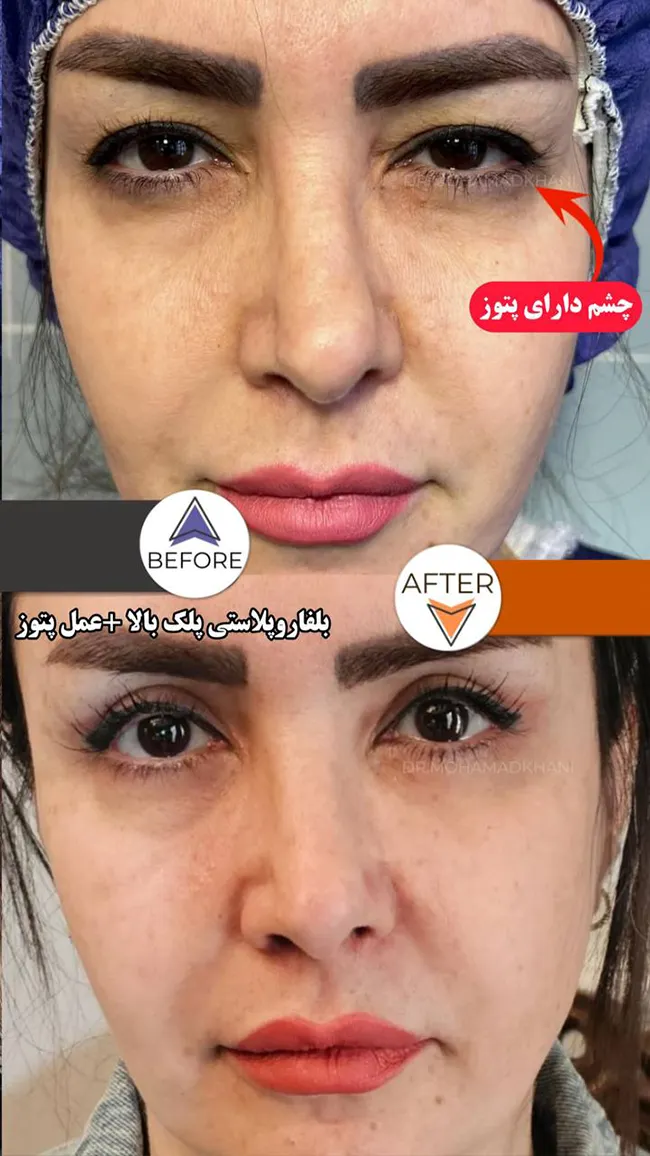
Yes. Ptosis surgery can often be performed at the same time as other eyelid or eye surgeries when medically appropriate.
Examples include:
- Upper eyelid blepharoplasty.
- Lower eyelid surgery.
- Other reconstructive eyelid procedures.
- Selected ophthalmic surgeries recommended by the surgeon.
Combining procedures may reduce the number of surgeries and recovery periods when appropriate.
Frequently Asked Questions
Can non-Iranian patients have ptosis surgery in Iran?
Yes. International patients can travel to Tehran for ptosis surgery with Dr. Mehdi Mohammadkhani and receive consultation, surgery, and postoperative follow-up.
Can ptosis surgery be combined with other eye or eyelid surgeries?
Yes. Depending on the patient’s condition, ptosis surgery can be performed together with procedures such as blepharoplasty or other eyelid surgeries during the same operation.
How long should I stay in Iran after ptosis surgery?
Patients are generally advised to stay in Iran for approximately two weeks to complete postoperative examinations before returning home.
Can I travel alone to Iran for ptosis surgery?
Yes. Most international patients can travel alone for surgery because the procedure is usually performed on an outpatient basis. However, having assistance during the first day after surgery may be helpful.
Is ptosis surgery performed in children?
Yes. Dr. Mehdi Mohammadkhani performs ptosis surgery for both children and adults. The surgical technique is selected based on the child’s eyelid muscle function and the severity of congenital ptosis.
Can I have an online consultation before traveling?
Yes. International patients can schedule a WhatsApp video consultation with Dr. Mehdi Mohammadkhani before traveling to Iran. During the consultation, the doctor reviews photographs, evaluates the eyelids through a video call when appropriate, discusses treatment options, and helps plan the patient’s trip.
WhatsApp Consultation: +98 920 908 5602
Why Choose Tehran, Iran for Ptosis Surgery?
Iran has become a destination for patients seeking specialized ophthalmic and eyelid surgery because of experienced surgeons, modern medical facilities, and competitive treatment costs.
Patients choosing Dr. Mehdi Mohammadkhani in Tehran benefit from specialized evaluation, advanced surgical techniques, outpatient treatment in most cases, and dedicated care for international patients from consultation through recovery.
Conclusion
Ptosis is not only a cosmetic concern but can also affect vision, comfort, and quality of life. Choosing an experienced ophthalmologist is essential for achieving both functional and aesthetic results.
Dr. Mehdi Mohammadkhani provides comprehensive diagnosis and advanced ptosis surgery in Tehran, Iran, including Levator Advancement/Resection, Frontalis Sling, and MMCR procedures for adults and children. Most surgeries are performed on an outpatient basis, and international patients can begin the treatment process with a WhatsApp video consultation before traveling to Iran.